

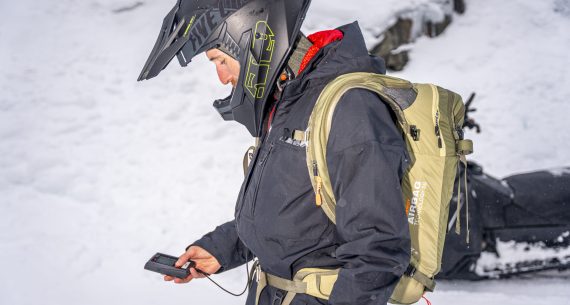
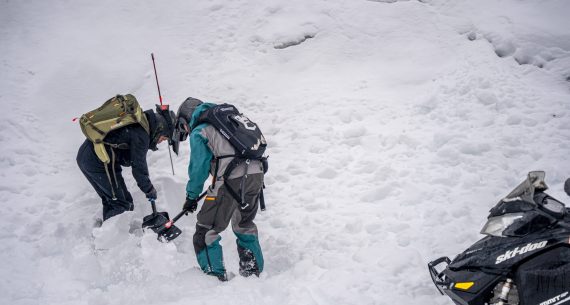
Avalanche danger when snowmobiling off-piste in Québec
With extensive experience in avalanche safety in Quebec, Avalanche Quebec has been best known for its services to skiers and snowboarders. Times are changing, and to ensure that the mountains stay a safe playground for everyone in winter, we are developing products specifically designed for snowmobilers. Our mission remains the same, but we are simply expanding it to a wider audience: to protect the public, prevent accidents, and improve avalanche safety by providing activities and services to raise awareness, inform, and educate the population, primarily in Quebec.
Indeed, even in Quebec!
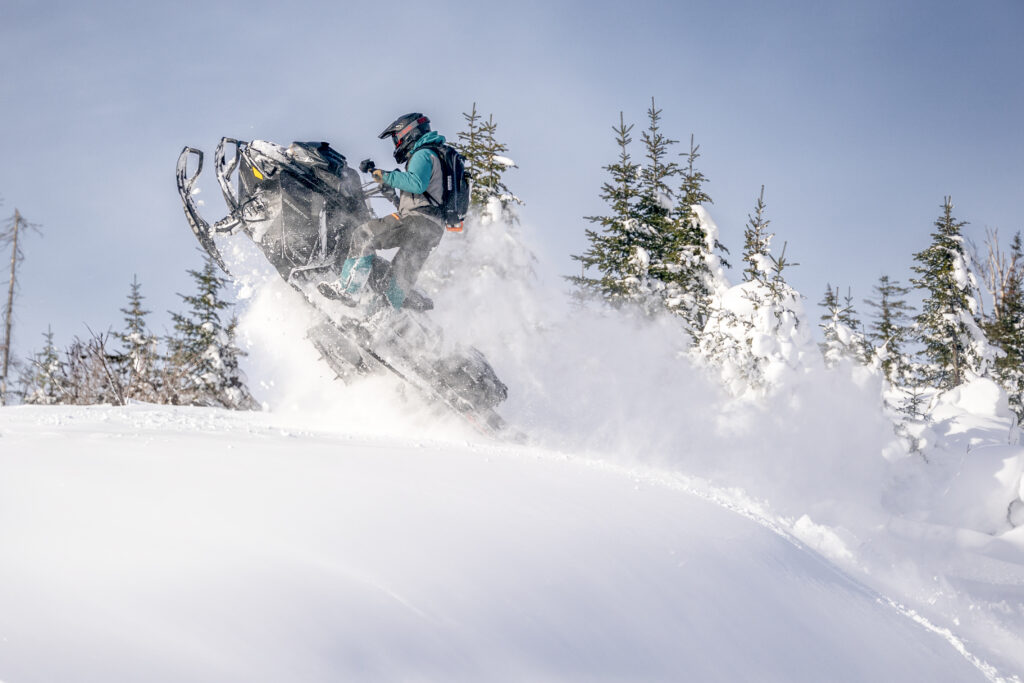
Avalanche accidents in the backcountry involving snowmobiles in Quebec happen more often than you might think. From videos of close calls on social media to eyewitness testimonies, it’s impossible to count them all, but we know for sure that the danger is real.
Since 2018, in Quebec, 10 riders have been involved in avalanche accidents, 7 people have been buried, and 3 have unfortunately lost their lives. These figures are very preliminary, and you may have heard of other cases.
And of course, in the west
Additionally, many Quebecers travel outside the province to enjoy the mountains and powder snow of the Rockies.
No matter where you’re headed, here are some tips and resources to help you prepare for a trip to the mountains by following the three steps we recommend, which could save lives: learn, gear up, stay informed
1: LEARN
The subject is vast and the consequences can be significant. Where should you begin your education?
Avalanche safety training courses, mountain travel, navigation, and/or first aid in remote areas are all relevant to improving your mountain skills and ensuring you have a great day.
Training courses in Quebec
Avalanche Quebec does not offer any courses, but can help you find the right course for your objectives. Contact the providers directly for more details and to make reservations. To do so, consult our events calendar and click on the course that interests you; the provider’s contact information is listed there.
Recreational Training Courses (general public)
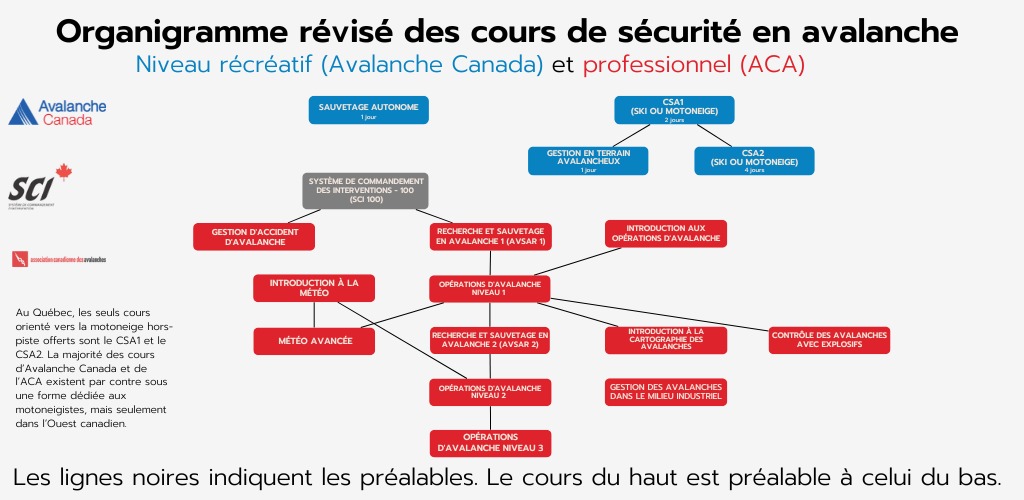
Avalanche Quebec promotes all avalanche courses in Quebec offered by independent providers accredited by Avalanche Canada. Avalanche Canada’s training program offers progression from basic to advanced levels and is the national standard for recreational training. For snowmobiler-specific courses, only AST1 and AST2 are offered in Quebec. Contact the providers directly for more details and to reserve your spot.
INTRODUCTION TO AVALANCHE SAFETY (AST1)
Avalanche Skills Training 2 (AST2)
Prerequisites: AST1 & field experience
Suggested Further Training
To further develop your mountain skills, we recommend these four courses or platforms, all of which are open to the general public and require no prerequisites.
Avy Savvy
Introduction to Weather
ONLINE COURSE: INTRODUCTION TO AVALANCHE OPERATIONS
First Aid in Remote Areas
Additional resources
To further develop your mountain skills, we recommend these resources and readings.
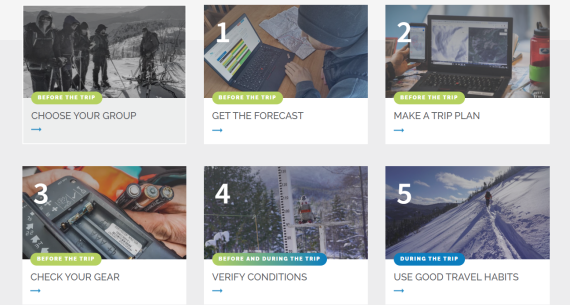
The daily process

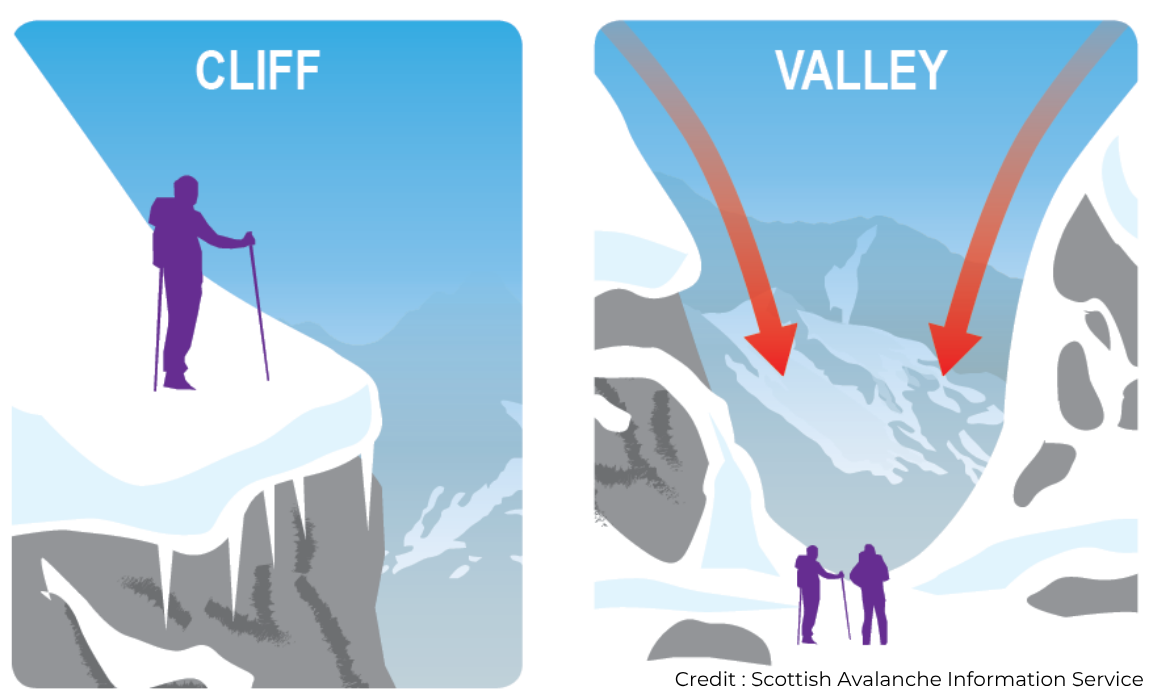
Terrain traps
Série Companion Rescue (motoneige) par Avalanche Canada
1 min 12The Survival Curve par Avalanche Canada (EN)
1 min 12
10 min 36Série Companion Rescue // 1. First Steps par Avalanche Canada (EN)
10 min 36
1 min 32Série Companion Rescue // 2. Signal Search par Avalanche Canada (EN)
1 min 32
1 min 0Série Companion Rescue // 3. Coarse Search par Avalanche Canada (EN)
1 min 0
1 min 8Série Companion Rescue // 4. Fine Search par Avalanche Canada (EN)
1 min 8
1 min 10Série Companion Rescue // 5. Probing par Avalanche Canada (EN)
1 min 10
1 min 18Série Companion Rescue // 6. Shovelling par Avalanche Canada (EN)
1 min 18
1 min 8Série Companion Rescue // 7. Getting Help par Avalanche Canada (EN)
1 min 8
2 min 51Rescue Practise par Avalanche Canada (EN)
2 min 51À voir ensuite
2: GEAR UP
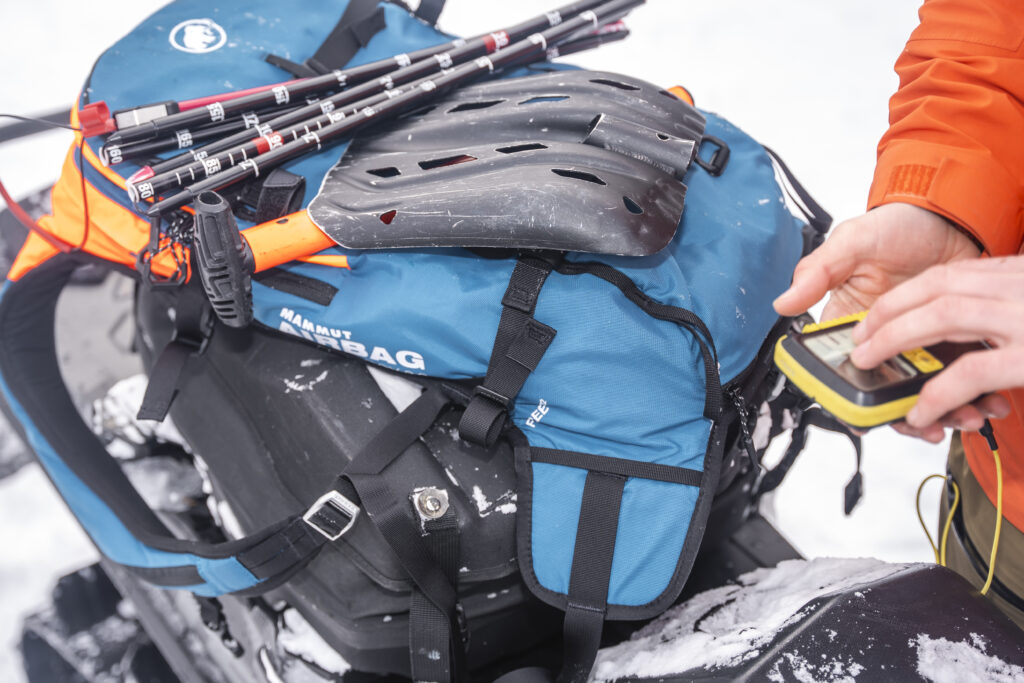
Have you taken an avalanche safety training course, consulted the resources provided, and now want to get the equipment you need to stay safe on the slopes? In your backpack, keep the essentials for searching and rescuing your group members. If all your safety equipment is on the snowmobile and it gets buried, you won’t have your shovel and probe, and it will be very difficult and much more time-consuming to find the victims. Their chances of survival will then be very low. Get an inflatable backpack (airbag) to reduce the likelihood of being buried and bring the essentials for first aid and evacuation.
Where can I rent avalanche safety equipment?
If you don’t want to purchase avalanche safety equipment (available in most outdoor stores where mountain gear is available), you can also rent it. Whether it’s an airbag, a transceiver-shovel-probe kit or a satellite communication device, it’s possible to find it.
3: STAY INFORMED
Last but not least: stay informed. Now is the time to find out everything you can about conditions in the mountains. Whether or not an avalanche report is available for the region you want to visit, there are various tools at your disposal.
Avalanche forecasting
In a zone targeted by the Avalanche Québec's bulletin
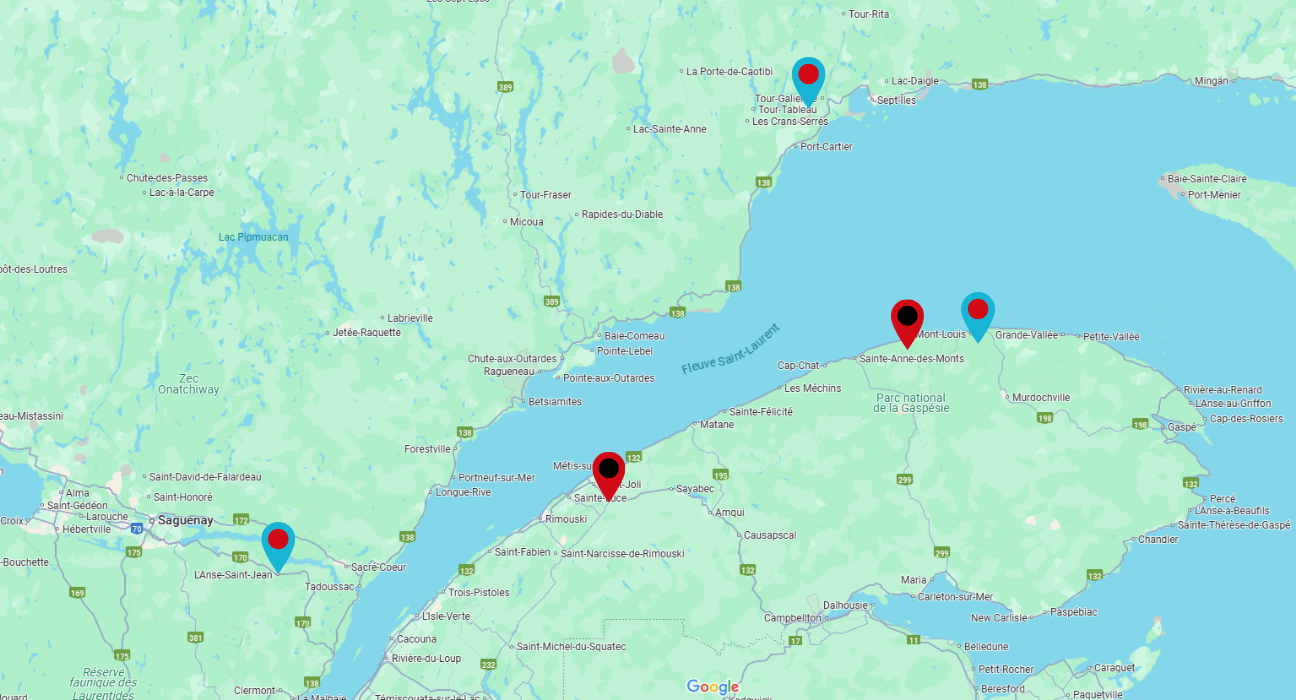
The Chic-Chocs avalanche bulletin is available on our website and on the Ski Haute-Gaspésie mobile app. It specifically covers an area along Route 299. Outside the bulletin’s coverage area, we also issue warnings for the northern coast of Haute-Gaspésie and the Murdochville region as needed. These warnings are particularly useful for backcountry snowmobilers, as this is snowmobile-accessible territory.
In an area covered by Avalanche Canada bulletins
The area covered by the bulletins includes regions in British Columbia, Alberta, Yukon and Newfoundland. You can consult their bulletins on their website.
What if there's no bulletin for the region?
The Dangerator
Avalanche forecasts are issued for several mountainous regions in Canada, but not all of them. Avalanche Canada has developed a tool to estimate avalanche danger outside the bulletin’s coverage area. Whether you’re planning an expedition outside our bulletin’s coverage area in the Gaspé Peninsula, the Saguenay, the North Shore, or anywhere else in Quebec, you can use this decision-making tool on the morning of your trip to incorporate the most recent observations.
The Dangerator guides you through a process that allows you to obtain an approximate danger rating, based on weather conditions and your own observations.
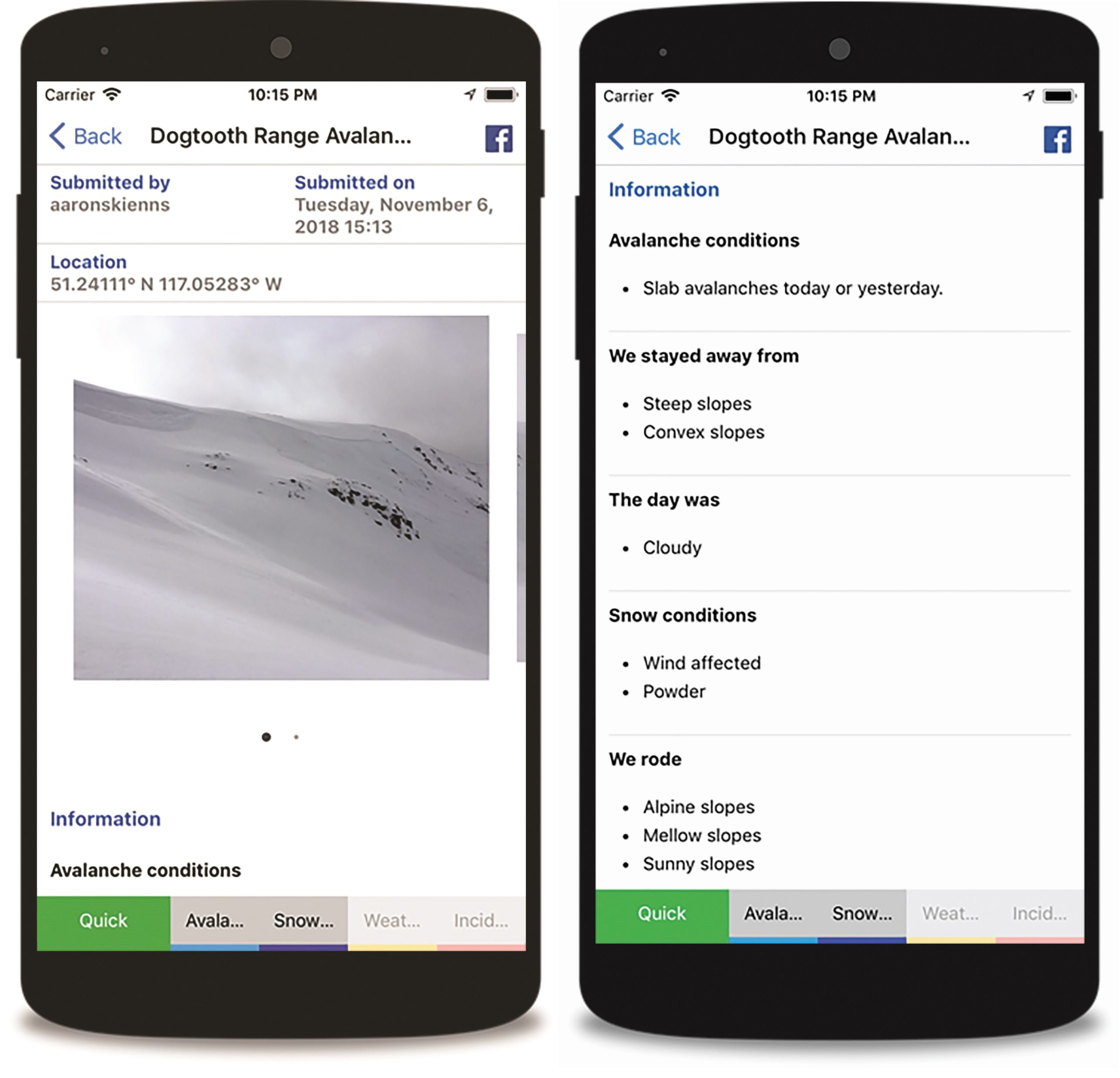
The Mountain Information Network
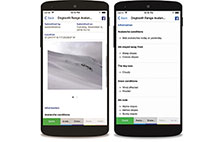
The Mountain Information Network, or MIN, is for getting and sharing real-time, location-specific backcountry information.
Reports are easy to upload—no special expertise is needed.
- Quick reports share general snow, weather, and ice conditions.
- Avalanche reports share information on notable backcountry avalanches, or overall avalanche conditions.
- Snowpack reports share observations on snowpack depth, layering, and bonding. Snowpack test results are also useful.
- Weather reports share data on temperature, precipitation, wind speed and direction, and cloud cover.
- Incident reports help us all learn by describing close calls and accidents.
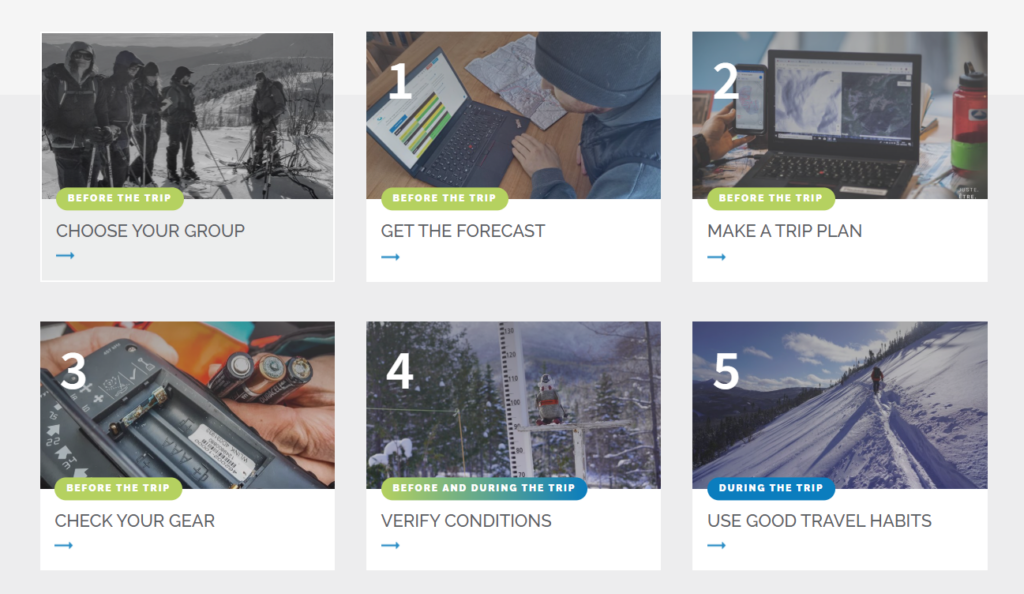
The Daily Process
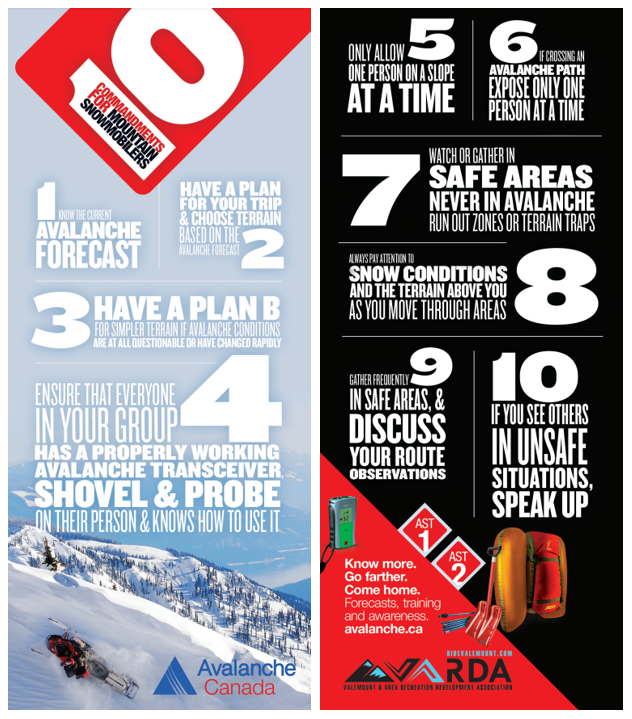
Once you’ve read the bulletin, the research phase isn’t over yet! Checking the weather, planning your route, having a backup plan, verifying conditions, and assessing signs of instability and slopes are all steps you need to take to ensure a safe day out in the mountains.
This process is detailed on the Daily Process page.
Want to simply ride with a clear head?
We agree that acquiring the knowledge and experience needed to be self-sufficient in the mountains can seem intimidating. Fortunately, guiding services can take care of your safety, allowing you to enjoy the ride without any worries.
Ask them your questions about :
- Avalanche safety training: none? AST1 (2 days) or AST2 (4 days) recreational course ? Professional Avalanche Operations Level 1 training (7 days) ?
- The safety equipment they supply;
- If they provide a brief avalanche safety training session before each outing
A good guide isn’t just about teaching you where the best places are so that you can get there independently on your next visit; it’s also about ensuring that there will be a next visit!
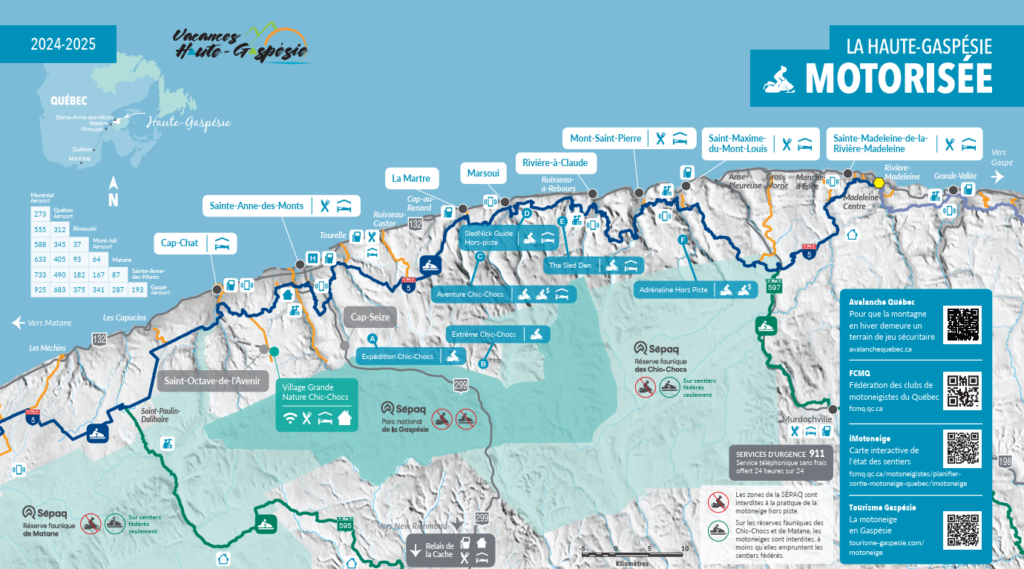
Who offers guided services in Haute-Gaspésie?
Vacances Haute-Gaspésie offers you the “Haute-Gaspésie motorized” map, which lists all kinds of services and their contact details. The most up-to-date version of this map can also be found here.
more resources, always more resources!
Ambassador
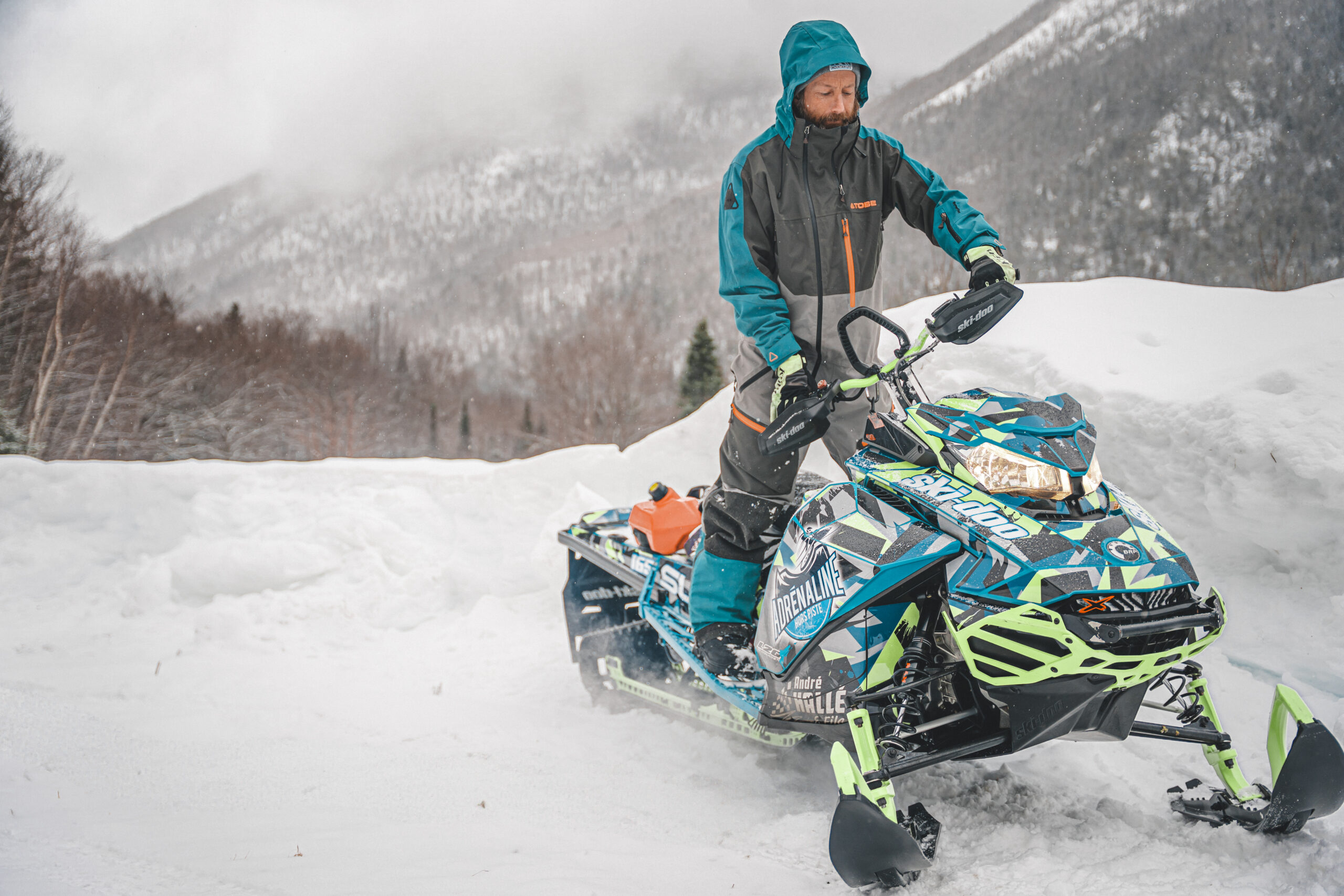
Meet David Lévesque, our snowmobile ambassador from Adrénaline Hors-Piste. He was the first person in the local sled industry to take avalanche safety training seriously. He completed the Avalanche Operations Level 1 course with the Canadian Avalanche Association in Western Canada, and continues to be at the forefront of the field.
Podcast
The Facteur Avalanche podcast episode with Olivier Meilleur, available on your favourite streaming platform, covered a wide range of topics. From his involvement with the Canadian Motorized Backcountry Guides Association (CMBGA) to the rescue mission he coordinated following a size 3 avalanche, it was a fascinating discussion that could easily have lasted much longer! (French only)
AST handbook
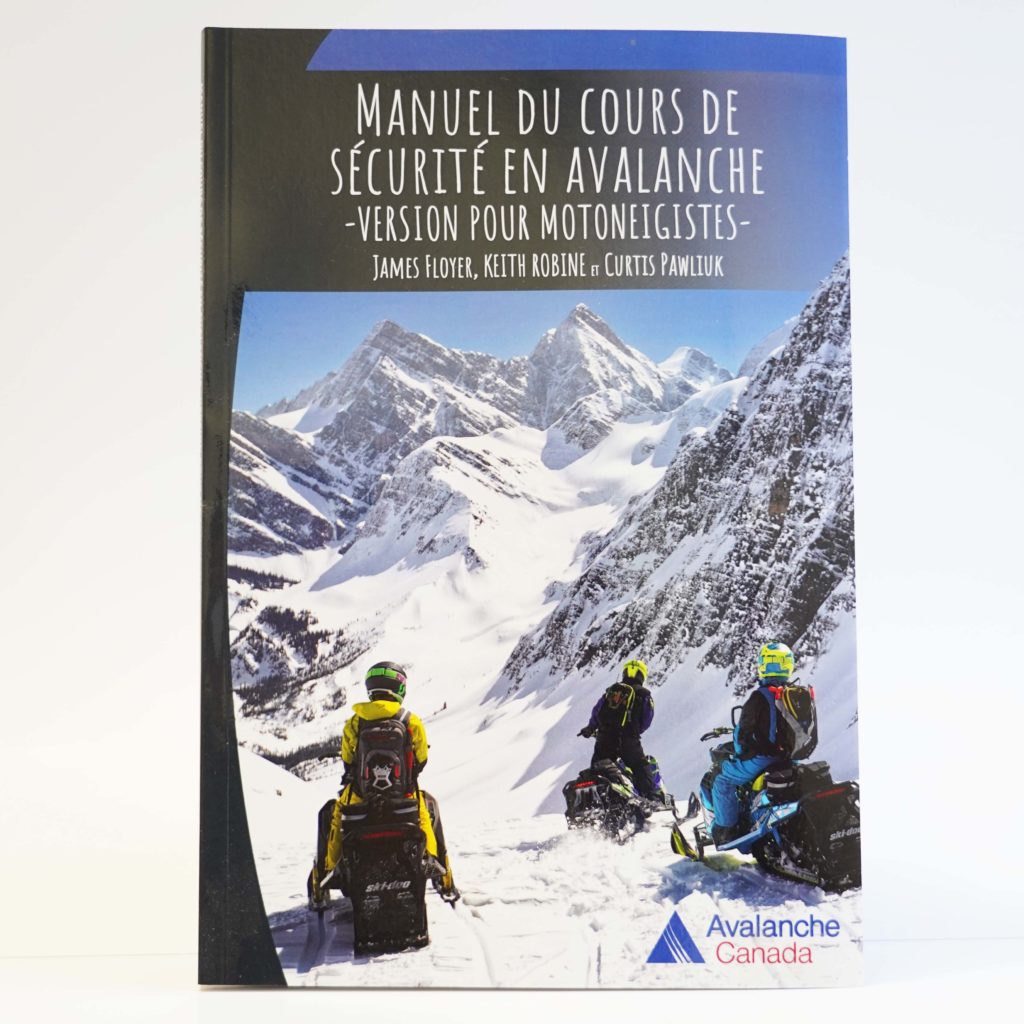
Did you know there’s an avalanche safety training course manual specifically for snowmobilers? It will be included in the course, but you can also purchase it from our online store.
Stay safe and have fun!